
Schweizer Alpen Jungfrau-Aletsch
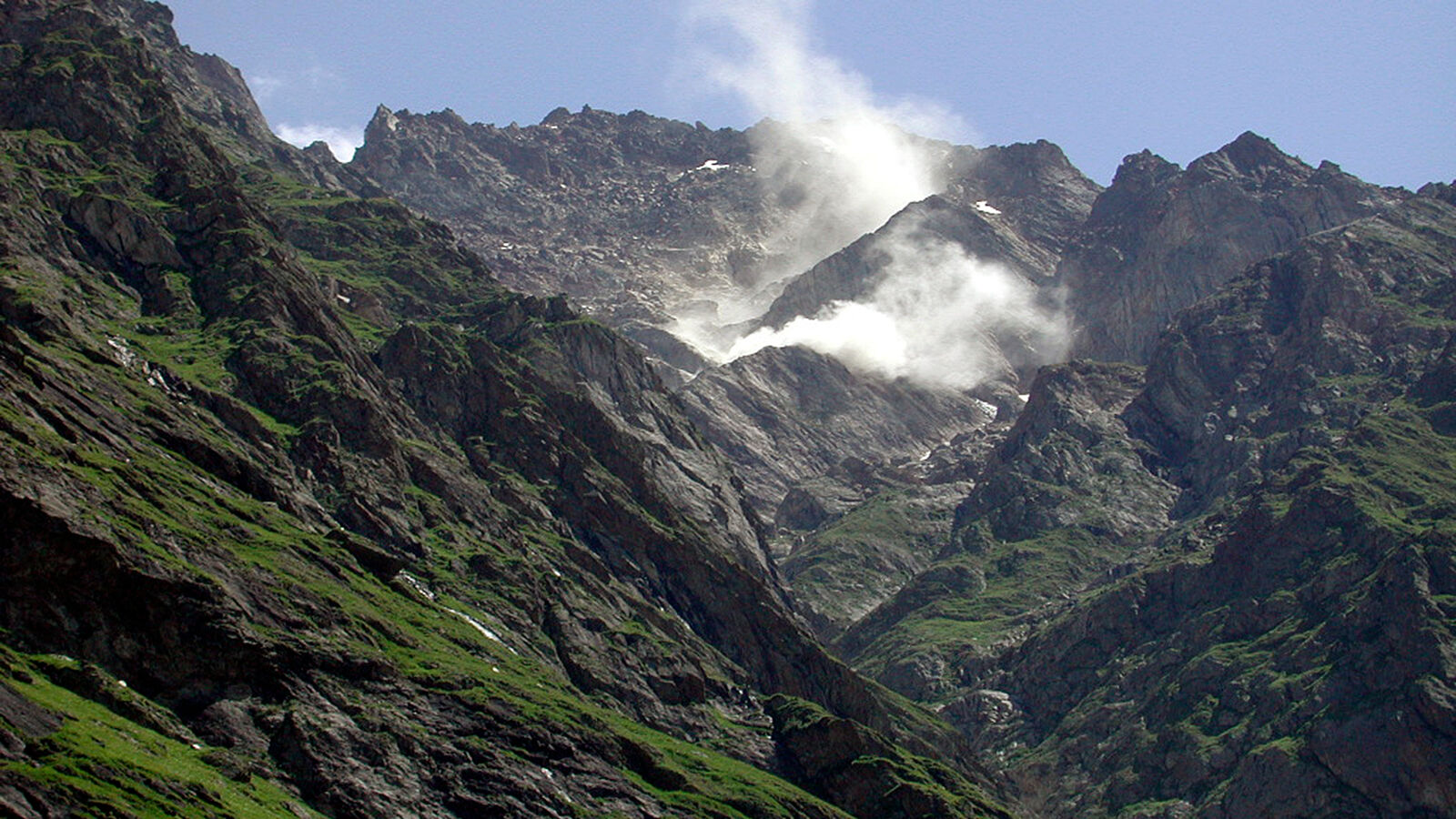
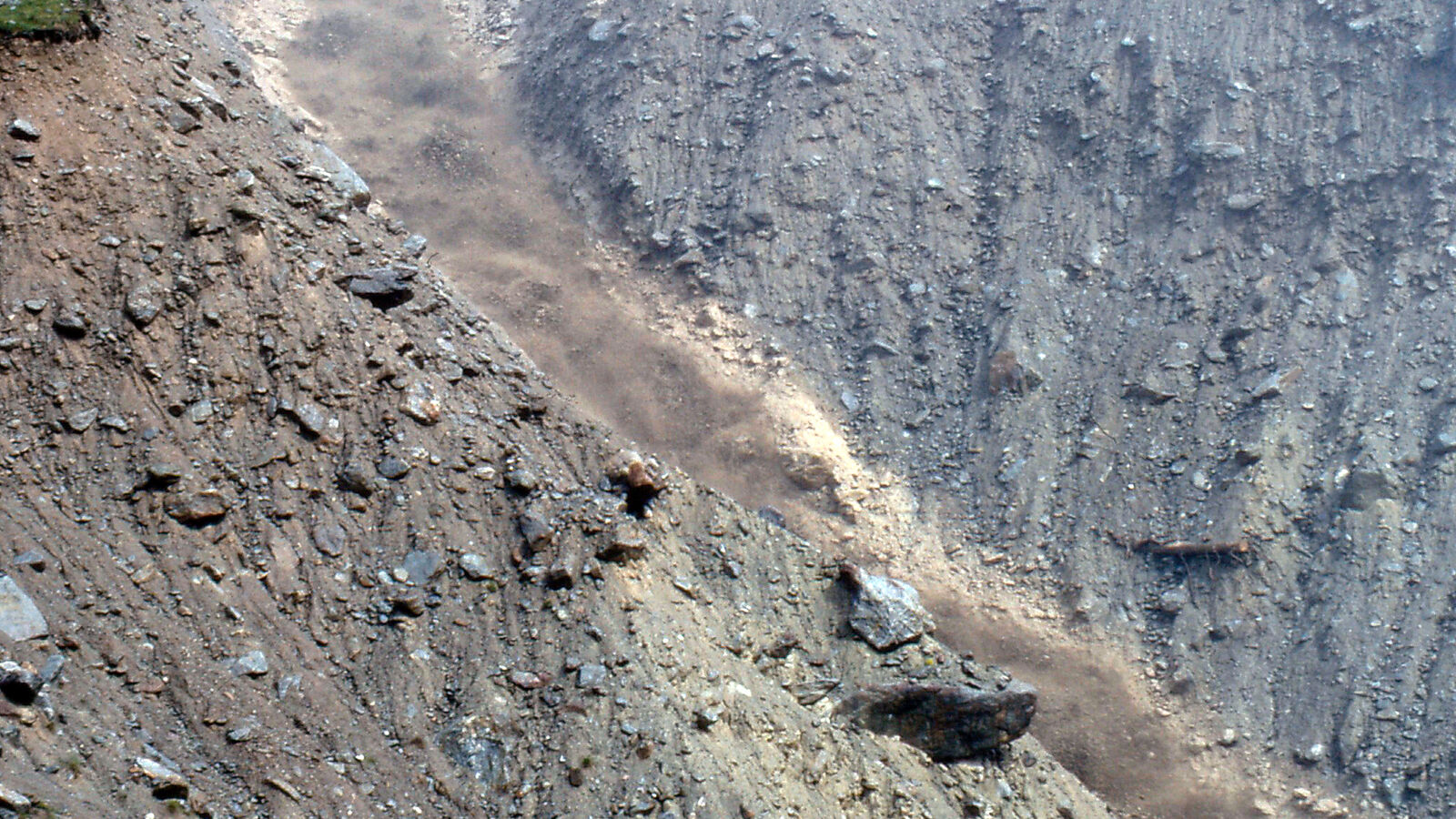
Felsstürze am Ankenbälli
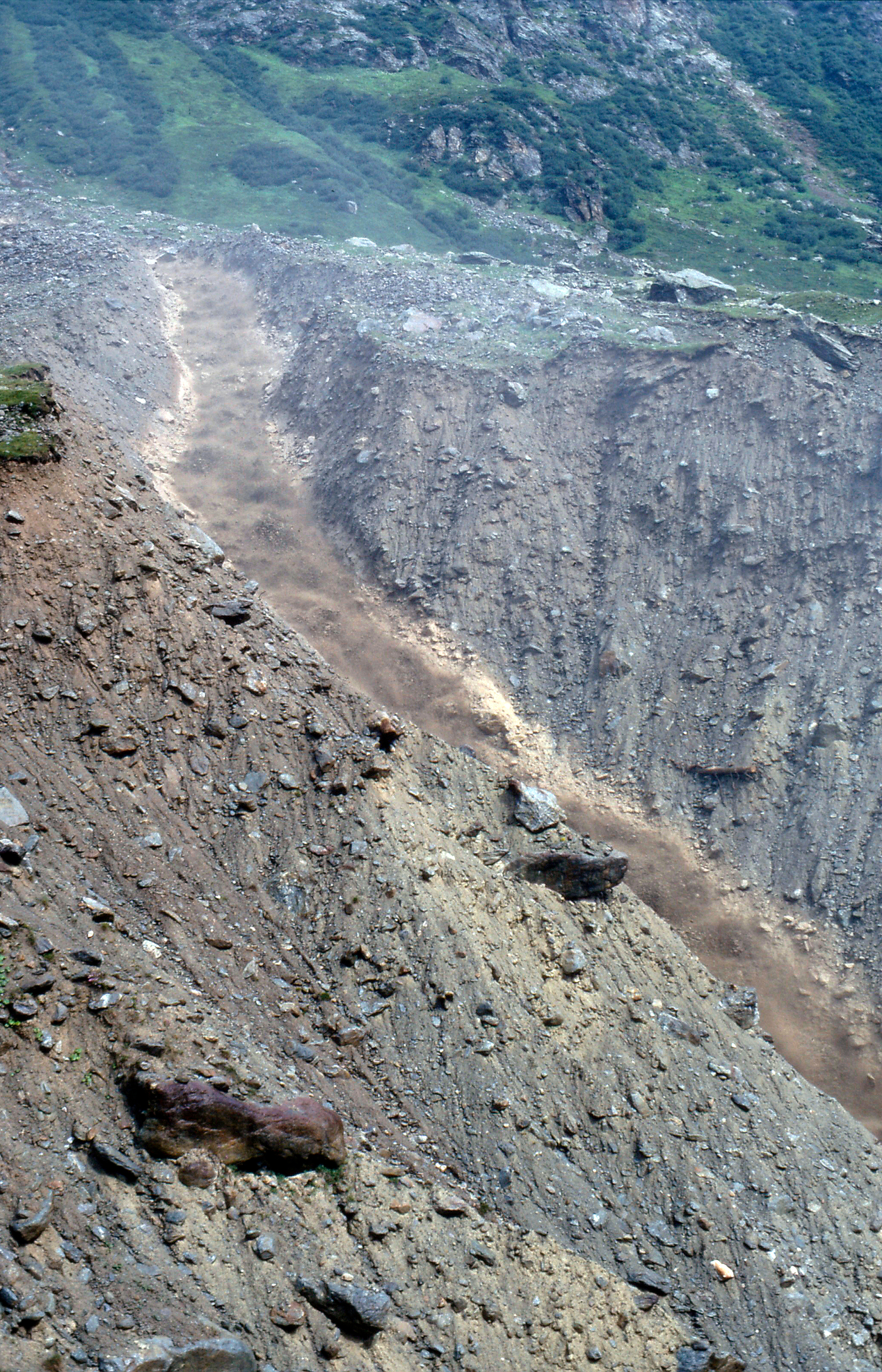
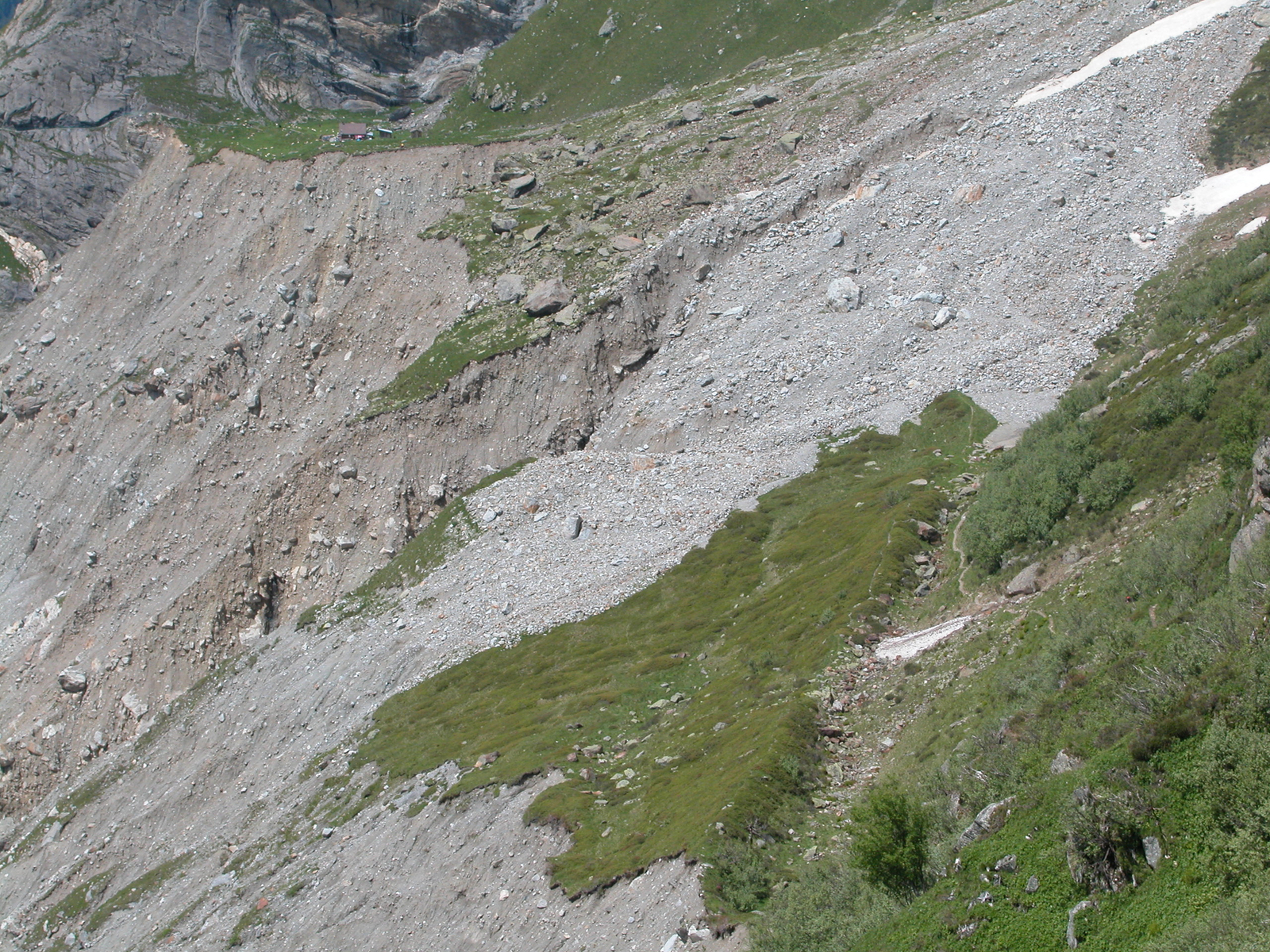
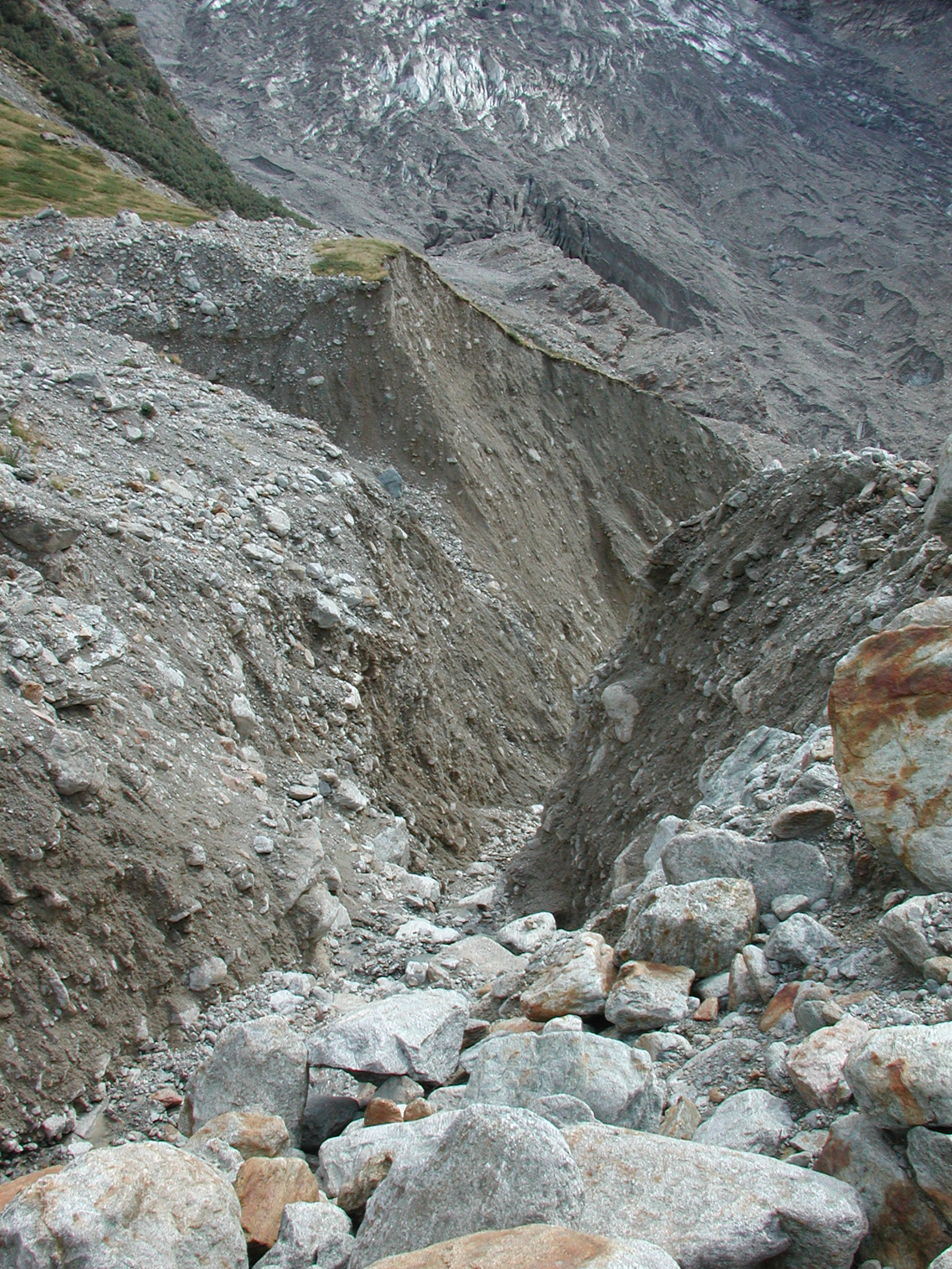
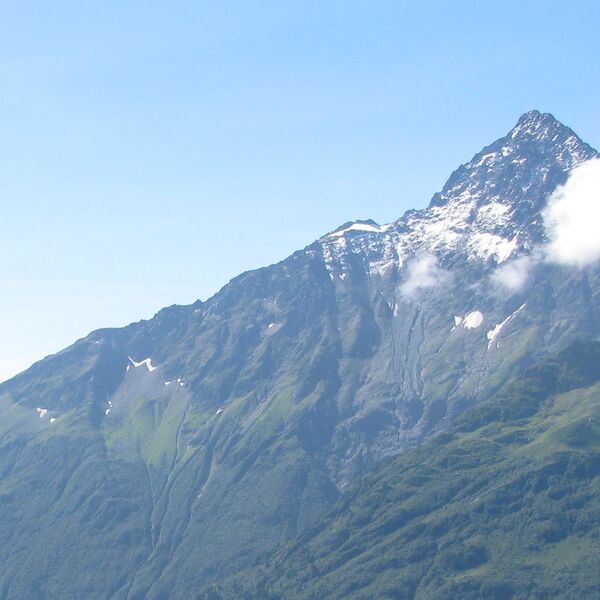
Rund um den Unteren Grindelwaldgletscher sind in den vergangenen Jahren Felsstürze, Steinschläge, Murgänge und Rutschungen aufgetreten, die einerseits mit dem starken Gletscherschwund und andererseits auch mit dem Auftauen des Permafrosts in den höheren Regionen ursächlich bedingt sind. Permafrost (permanenter Bodenfrost) ist Untergrundmaterial wie Fels oder Schutt, dessen Temperatur während mindestens einem Jahr unter Null Grad Celsius bleibt. Dieser hat im Hochgebirge eine stabilisierende Wirkung auf Fels und Schutt. Schmilzt das Eis, beginnt der Berg zu bröckeln und es entstehen Felsstürze. Zudem wird das auftauende Lockermaterial bei starken Niederschlagsereignissen in Form von erodierenden Murgängen ins Tal transportiert.
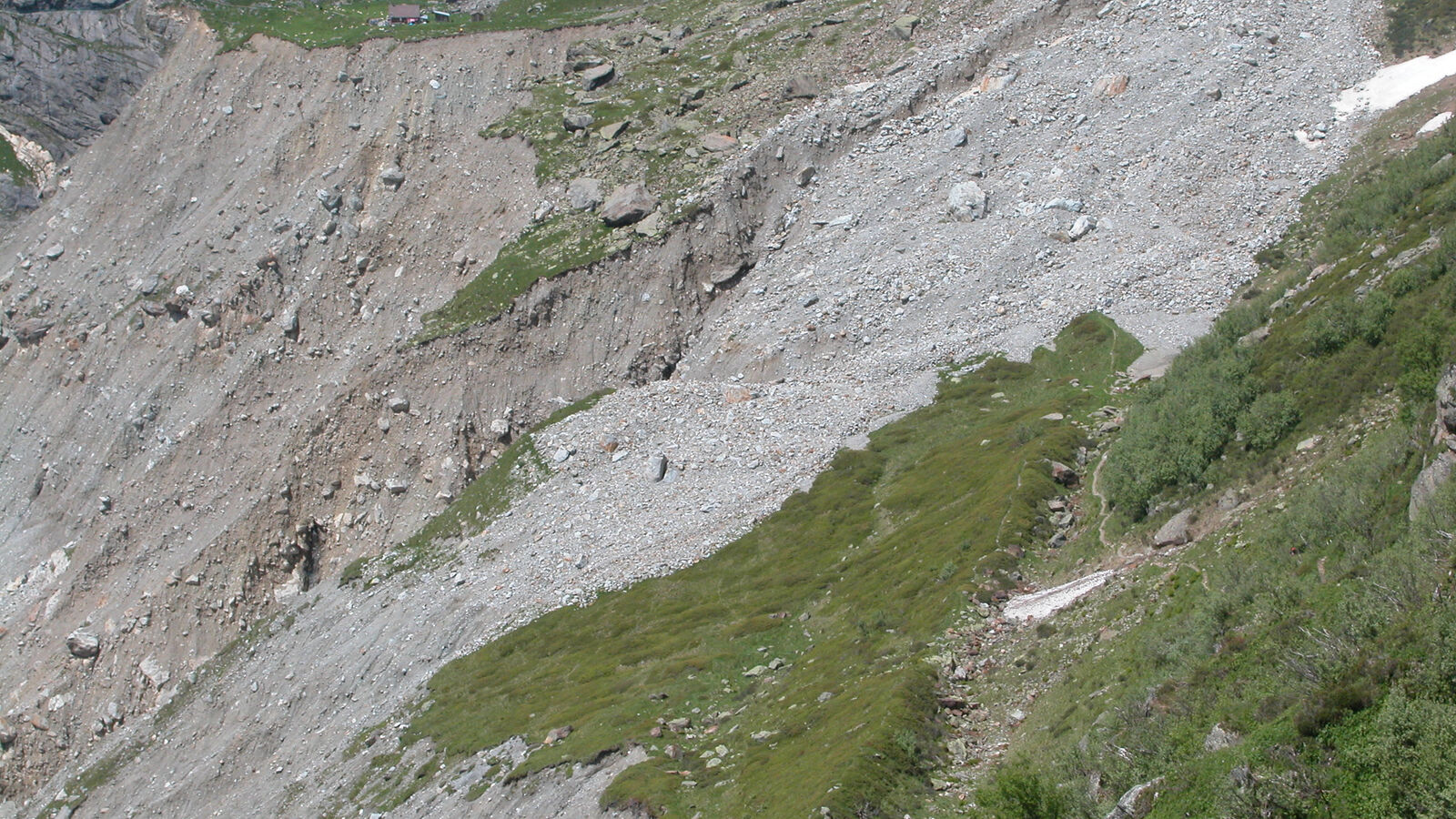
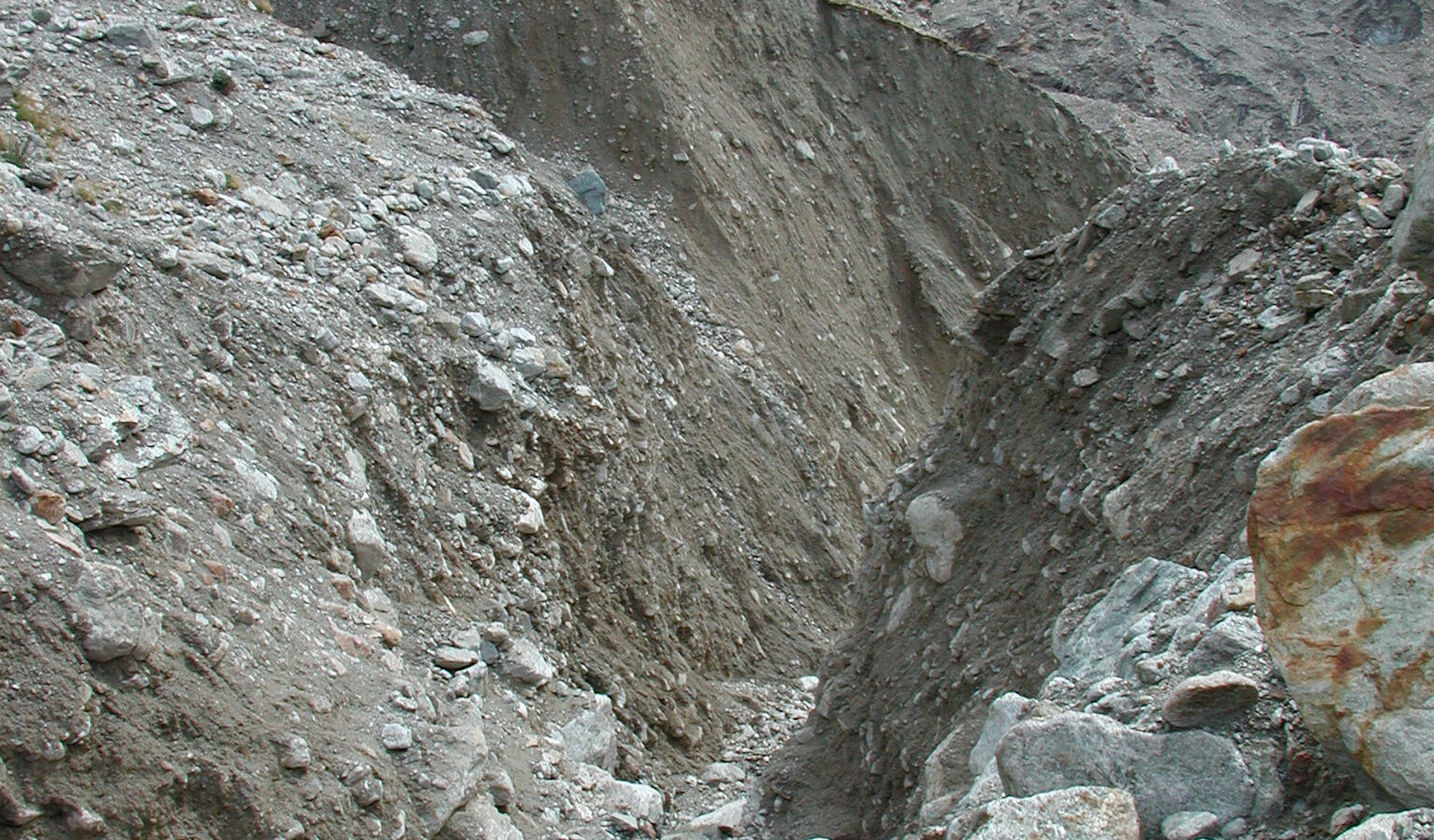
Block- und Felsstürze aus dem Gebiet des Ankenbälli, die auf das Auftauen des Permafrosts zurückzuführen sind, lagerten sich an dessen Fuss und am oberen Ende des Murkegels oberhalb der Stieregg ab. Dies hat um das Jahr 2000 dazu geführt, dass der Bach vom Ankenbälli etwa beim Ansatz des Murkegels umgelenkt wurde und sich neu weiter südöstlich einzutiefen begann, insbesondere durch Murgänge. Dadurch ist neben dem bereits bestehenden Graben bei der Stieregg weiter südlich ein neuer Graben entstanden. Die zwischen 2000 und 2005 erodierte Schuttmenge wird auf rund 700‘000 m3 beziffert. Seit der Felssturz- und Murgangaktivität ist die Begehung des Bergwegs zur Schreckhornhütte, der den Graben hinter der Bäregg quert, zeitweise fast unmöglich. Laufend muss der Weg wieder hergerichtet werden.
Grindelwaldgletscher
Ein Beitrag von Nadja.
Naturgefahren
Ein Beitrag von Barbara.
Schweizer Alpen Jungfrau-Aletsch
Schweizer Alpen Jungfrau-Aletsch
Schweizer Alpen Jungfrau-Aletsch
Schweizer Alpen Jungfrau-Aletsch
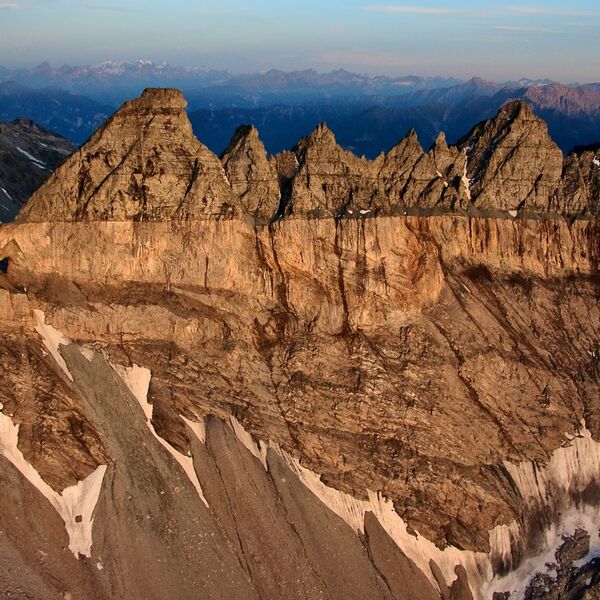
Tektonikarena Sardona
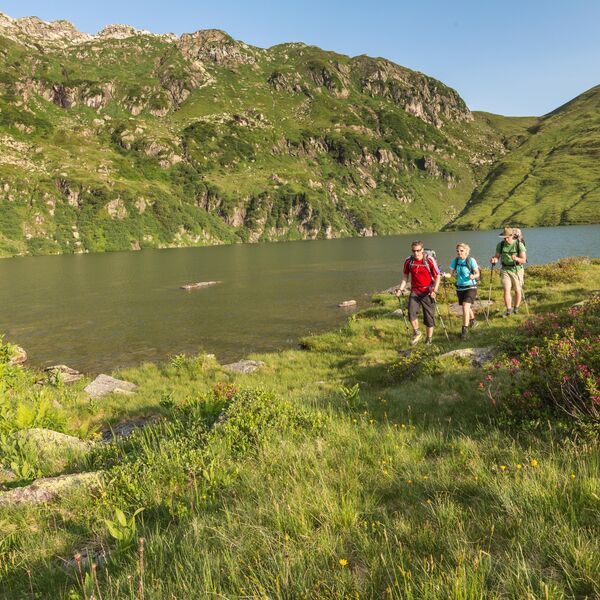
Tektonikarena Sardona