

Festung von Bellinzona
Festungsmauer
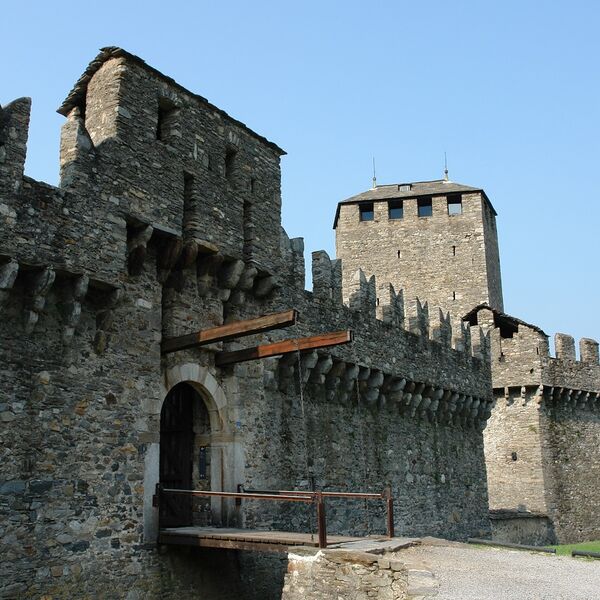
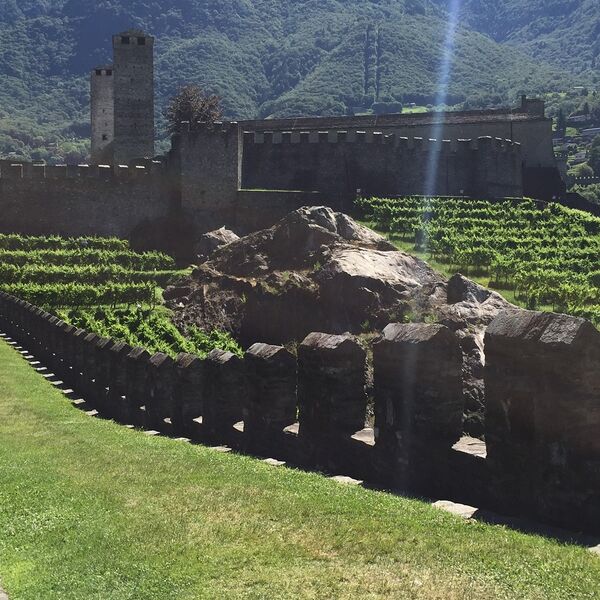
Die Murata (Festungsmauer), die an den westlichen Teil der Burg Castel Grande angeschlossen war, versperrte das gesamte Tessiner Tal und sicherte dem Herzogtum Mailand die Kontrolle über zahlreiche Alpenpässe.
Obwohl die Ursprünge dieser mächtigen Mauer nicht genau dokumentiert sind, ist es wahrscheinlich, dass eine erste Sperrmauer nach der Eroberung der Burg Bellinzona durch die Visconti im Jahr 1340 errichtet wurde. Aber erst in den 1480er Jahren, also in der Zeit der Sforza, wurde die Murata angesichts der wachsenden Expansionsbestrebungen der Eidgenossenschaft erheblich verstärkt und erweitert. Durch den Bau einer zweiten Mauer wurde der Komplex verdoppelt, wodurch die beiden noch heute sichtbaren Durchgänge entstanden: einer davon überdacht, etwa 4 Meter hoch, der andere in Form eines oberen Aussengangs, ausgestattet mit Zinnen und Pechnasen (Öffnungen, um Feinde von oben zu schlagen).
Die Stadtmauer mit ihrem Tor diente nicht nur der Verteidigung und Beobachtung des Territoriums, sondern war auch ein wichtiger Kontrollpunkt für Waren, die nach Bellinzona und zu anderen regionalen Messen transportiert wurden. Im 15. Jahrhundert hatte die Stadtmauer einen eigenen Burgvogt, der – nicht immer mit Erfolg – dafür sorgte, dass die Mauern nicht zu Kriegszwecken oder für Schmuggelzwecke überwunden wurden.
Im Jahr 1489 wurde auf Befehl des Herzogs Ludovico Sforza eine Brücke – auch Ponte della Torretta genannt – gebaut, um das Tal von Castel Grande bis zum rechten Ufer des Flusses Ticino weiter abzuschotten. Dieses imposante Befestigungssystem – etwa 800 Meter lang – wurde durch das Hochwasser des Flusses Ticino im Mai 1515 – auch bekannt als „Buzza di Biasca” – schwer beschädigt, das die Brücke und einen etwa 150 Meter langen Abschnitt der Murata selbst zerstörte.
Piazza Nosetto
6500 Bellinzona
Festung von Bellinzona
Festung von Bellinzona
Festung von Bellinzona

Festung von Bellinzona

Monte San Giorgio

Rhätische Bahn in der Landschaft Albula/Bernina